If you want to personalise your books, two of the simplest options are a book embosser and an ink stamp.
Both can add a name, initials, monogram or other design to a book, but they create very different results. A book embosser presses a raised design into the paper, while an ink stamp applies a printed design to the surface.
So which is better? It depends on what you want from the finished result. If you want an elegant, ink-free mark that feels like part of the book itself, an embosser is hard to beat. If you need quick, high-contrast marking across a wide range of materials, an ink stamp may be more practical.
What Is a Book Embosser?
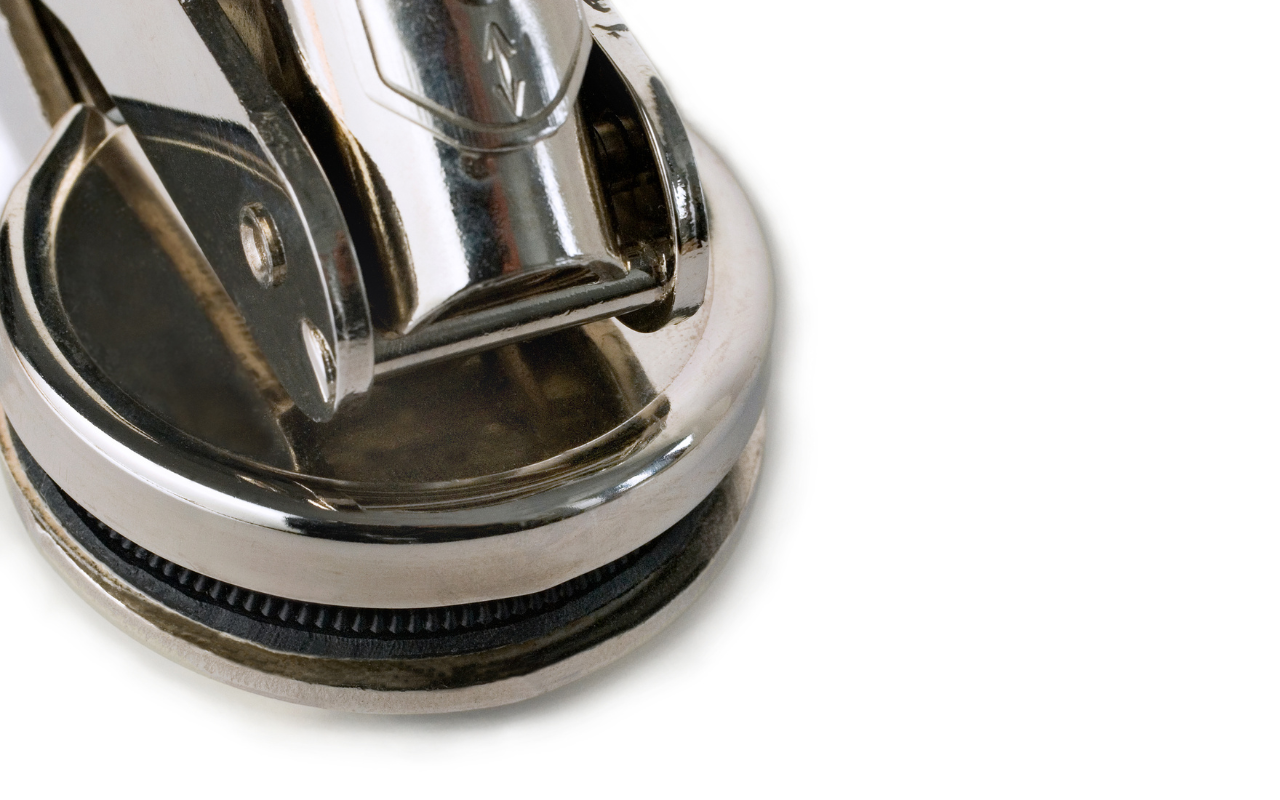
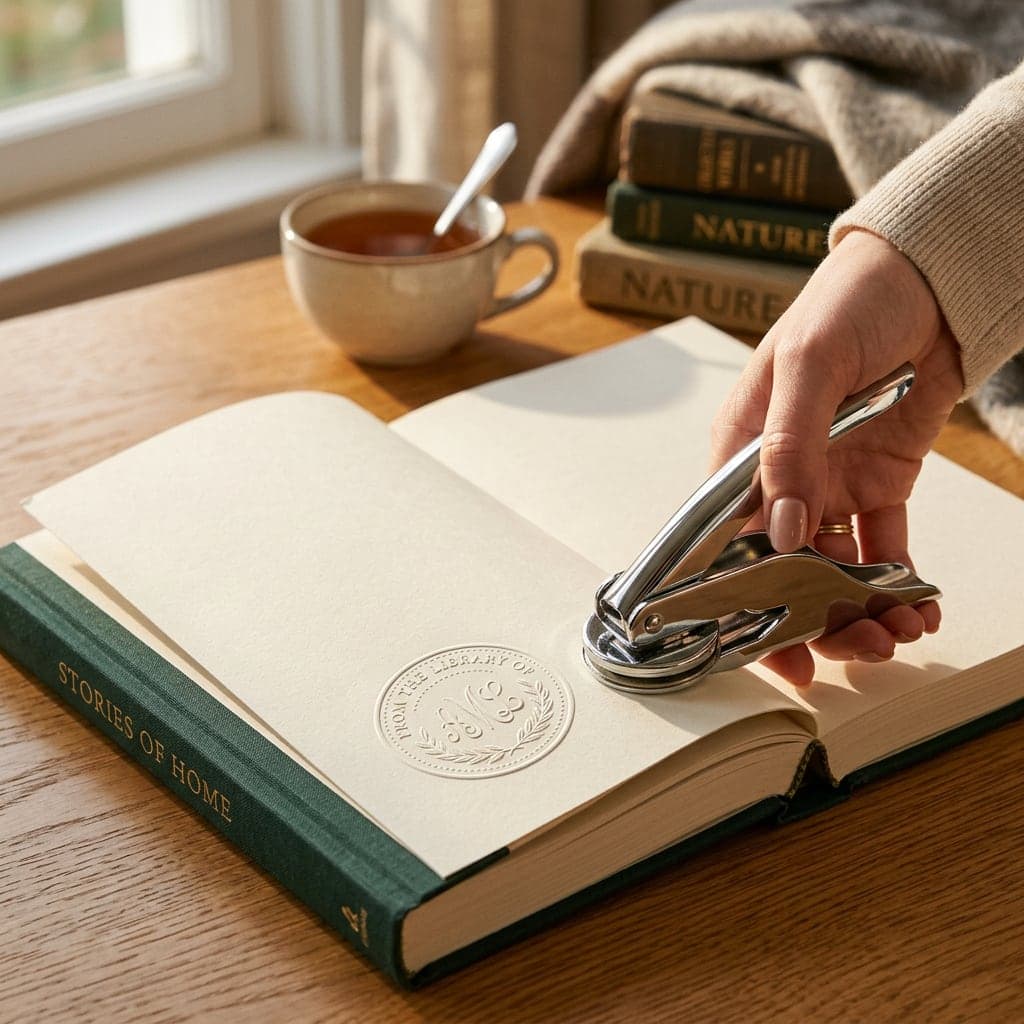
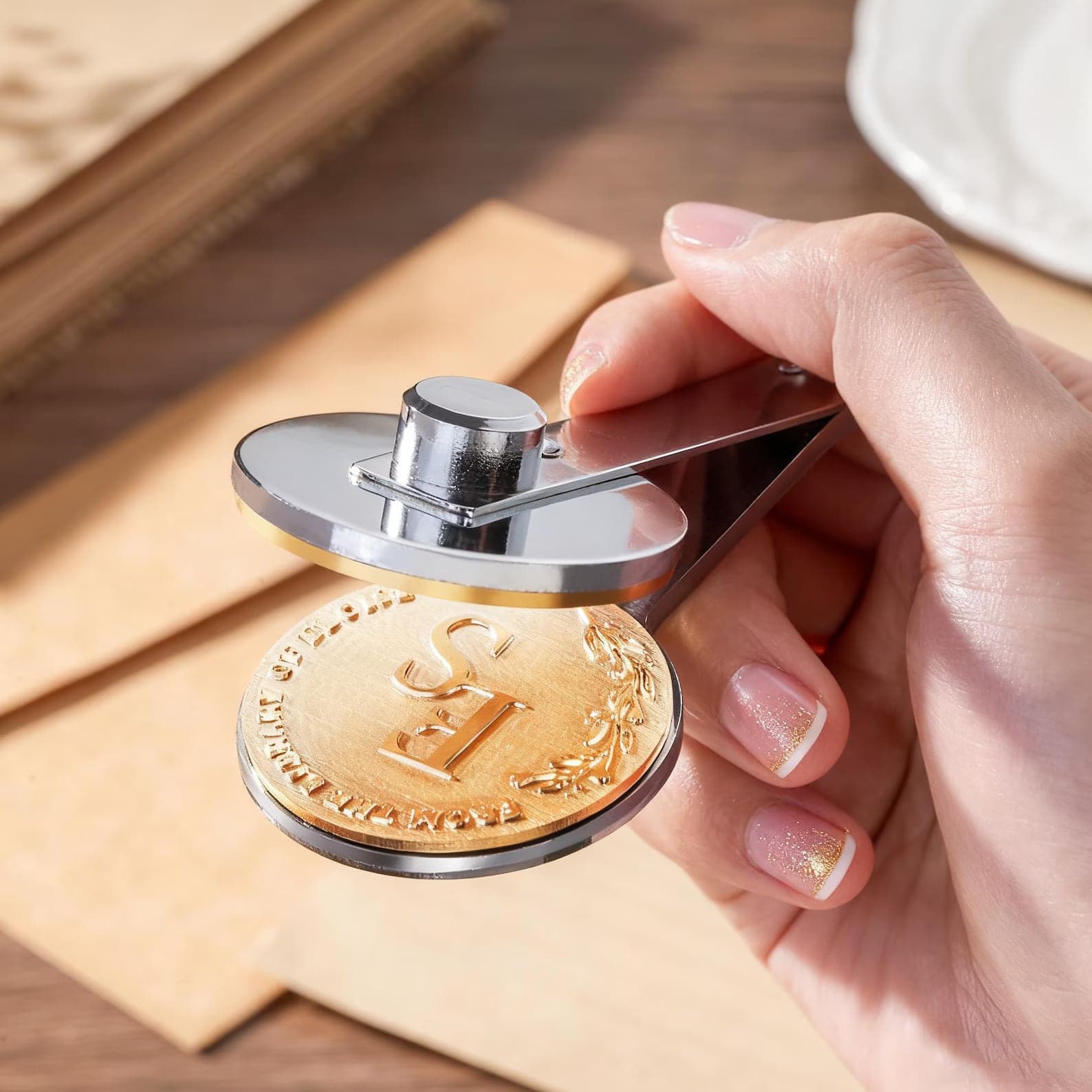
A book embosser is a handheld tool that presses a design into paper to create a raised, ink-free impression. They are commonly used to personalise books, notebooks, stationery and other paper items, with a name, initials, monogram, short phrase or custom artwork.
Unlike an ink stamp, an embosser does not print anything onto the surface. Instead, the paper itself is shaped by the pressure of the tool, creating a subtle, tactile mark that looks particularly elegant inside the front cover of a book.
New to embossing? Read What Is a Book Embosser? for a more detailed explanation of how embossers work and what they can be used for.
What Is an Ink Stamp?
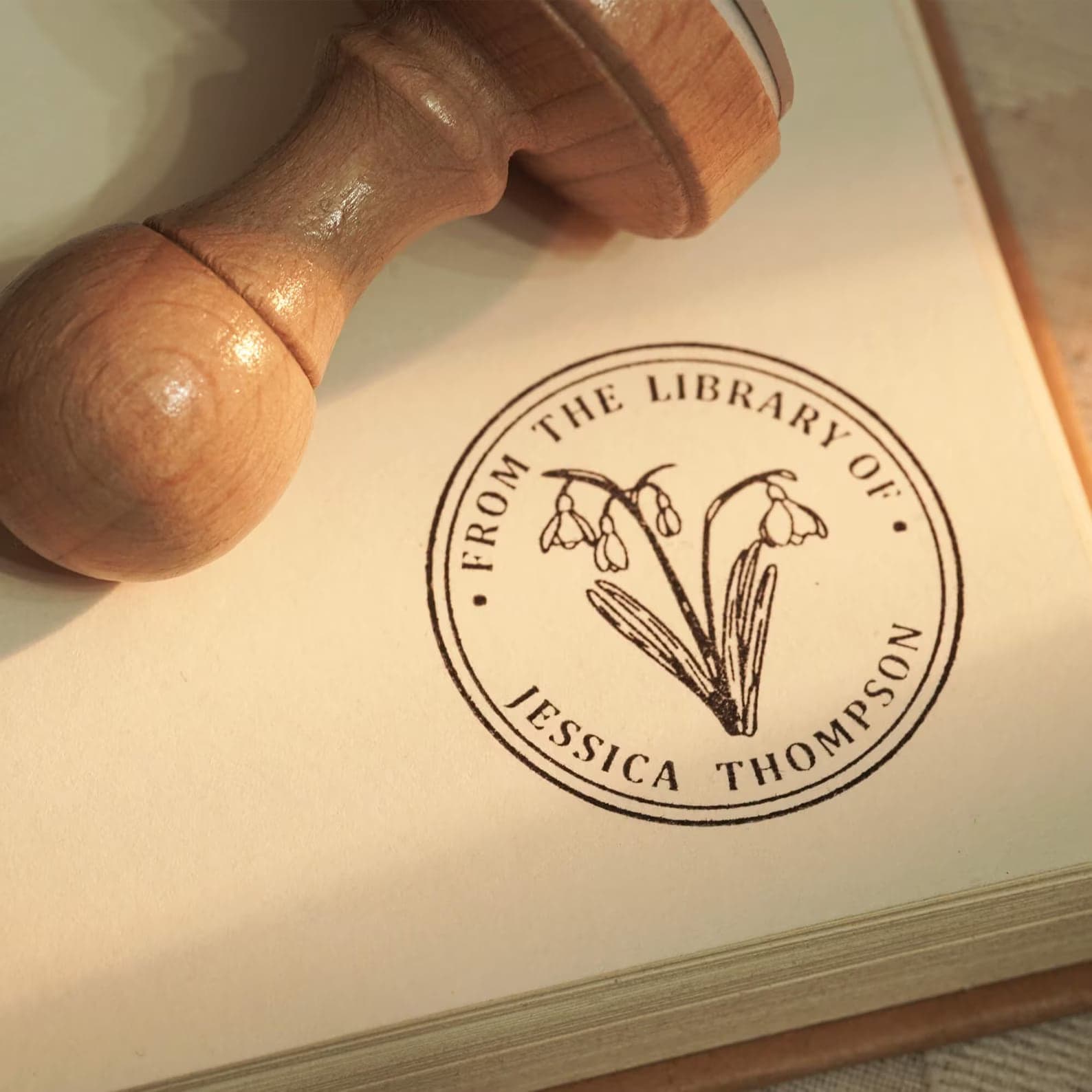
An ink stamp applies a printed design to a surface using ink. It may be used with a separate ink pad or have its own built-in ink reservoir, and like an embosser it can be personalised with a name, initials, logo or other design.
Ink stamps are popular because they are familiar, quick to use and create a strong visual mark. The main difference is that an ink stamp leaves colour on the page, whereas an embosser creates a physical impression in the paper.
Book Embosser vs Ink Stamp: Key Differences
The simplest way to compare them:
Book embosser
Raised, ink-free and understated
Ink stamp
Printed, high-contrast and practical
Neither is universally better. The right choice depends on whether you prioritise appearance, speed, maintenance, versatility or cost.
1. Finish and Appearance
This is probably the biggest difference between the two.
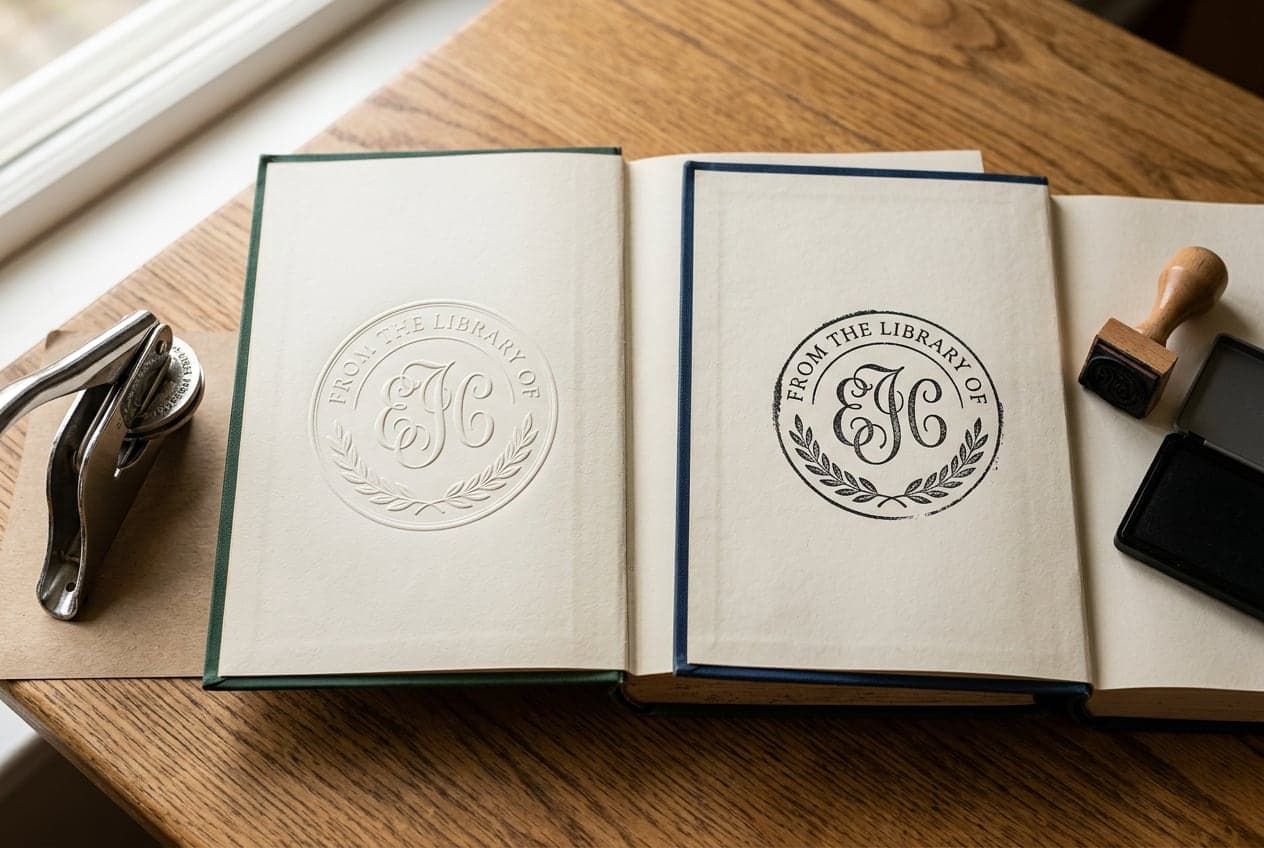
A book embosser creates a raised impression in the paper. There is no ink or colour involved, so the result is subtle and tactile. That makes embossing particularly well suited to personal libraries, book collections and gifts – a name or monogram inside the front cover looks like a permanent part of the book rather than something printed onto it.
An ink stamp creates a visible printed mark. This is useful when you want the name or design to stand out clearly, particularly for practical identification, but the appearance is generally more functional than an embossed impression.
- Best for an elegant, understated finish
- Book embosser
- Best for strong visual contrast
- Ink stamp
2. Ease of Use
Both tools are straightforward, but the process differs. With a book embosser, you position the tool on the page and apply firm, even pressure. There is no ink pad to prepare and no drying time afterwards. If you're not sure where the mark should go, see our guide to which page to emboss in a book.
An ink stamp is also simple, particularly if it is self-inking: press it to the page and lift it away. For very high-volume marking, an ink stamp may be faster. For a clean, mess-free experience, embossing has a clear advantage.
- Best for clean, ink-free use
- Book embosser
- Best for rapid bulk marking
- Ink stamp
3. Maintenance
A book embosser does not require ink, cartridges or an ink pad. Once you have it, there are no consumables needed each time you personalise a book – ideal if you plan to use it regularly for years.
Ink stamps need some upkeep because the ink supply eventually needs replacing or replenishing, and ink pads can dry out or become uneven with use. It's not difficult, but it's an extra consideration that doesn't apply to an embosser.
- Best for low maintenance
- Book embosser
4. Paper and Materials
Book embossers are designed primarily for paper and suitable card. They work particularly well on book pages, endpapers, stationery and similar paper products. Very thick, laminated or unusual materials may not produce a clean embossed impression.
Ink stamps can be more versatile depending on the stamp and ink. Different inks suit different surfaces, including certain card, labels and packaging. So if your main purpose is personalising books and paper, an embosser is the natural choice; for wider practical labelling, an ink stamp may be more versatile.
- Best for books and paper
- Book embosser
- Best for a wider range of practical marking
- Ink stamp
5. Personalisation
Both embossers and stamps can be personalised – names, initials, monograms and simple logos work well with either. The difference is how the design appears once applied.
An embossed design is created by pressing the paper, so clean, relatively simple artwork tends to produce the best result. Names and initials are particularly effective because they remain easy to read without colour. An ink stamp can make more detailed artwork visually prominent and offers bold or colourful results.
If you want something that feels personal, understated and premium, an embosser is usually the better choice. For ideas, browse the ready-made designs in our round book embosser builder, or explore our guide to good gifts for book lovers.
Make every book unmistakably yours
Design a personalised, ink-free embosser and preview it live. Free UK delivery.
6. Cost and Long-Term Value
A basic ink stamp is often cheaper to buy initially, particularly for a simple design, but can involve ongoing costs for ink or replacement pads.
A book embosser is a one-off tool that can be reused without buying ink, so it's worth considering the total cost of ownership rather than just the initial price. There's also an emotional difference: a personalised embosser is often chosen as a long-term keepsake or as a gift – it's one of our most popular teacher appreciation gifts. See our book embosser prices for details.
- Best for the lowest initial cost
- Often an ink stamp
- Best for a reusable, ink-free tool
- Book embosser
7. Best Uses
Both tools have their place.
Choose a book embosser if you want:
- A personalised mark inside your books
- An elegant, understated finish
- An ink-free ownership mark
- Something reusable for a personal library
- A thoughtful gift for a reader or book lover
- A personalised name, monogram or simple design
Choose an ink stamp if you want:
- Fast marking of large numbers of items
- A highly visible printed mark
- A tool for varied practical labelling
- The flexibility to change ink colours
- A lower-cost option for simple marking
If your main purpose is to personalise your own books, lend books to friends or mark a growing personal library, an embosser is particularly well suited to the job.
Which Should You Choose?
If you're deciding between a book embosser vs ink stamp for personalising books, the book embosser is generally the better choice when appearance and longevity matter most. It creates a raised, ink-free impression that feels subtle and personal – no ink to replace, no drying time and no risk of transferring wet ink to another page.
An ink stamp makes more sense when speed, strong contrast or versatility across materials is your priority.
| Feature | Book Embosser | Ink Stamp |
|---|---|---|
| Finish | Raised and tactile | Printed and visible |
| Ink required | No | Yes |
| Drying time | No | Can be required |
| Maintenance | Very low | Ink/pad maintenance |
| Best for | Books, libraries, stationery | Labelling and bulk marking |
| Appearance | Subtle and premium | Bold and practical |
| Initial cost | Usually higher | Often lower |
| Long-term consumables | None | Ink may need replacing |
The bottom line
For personalising books, a book embosser is usually the better option if you want the finished result to feel special. For practical, high-volume marking, an ink stamp may be more efficient.
If you want a personalised mark that becomes part of your books rather than simply printing a name onto the page, an embosser is difficult to beat.
Make every book unmistakably yours
Design a personalised, ink-free embosser and preview it live. Free UK delivery.